
Skip to content
Search

Latest Stories

Follow Us:
Top Stories

Trump’s war on Canada a pitiful own goal

Opinion

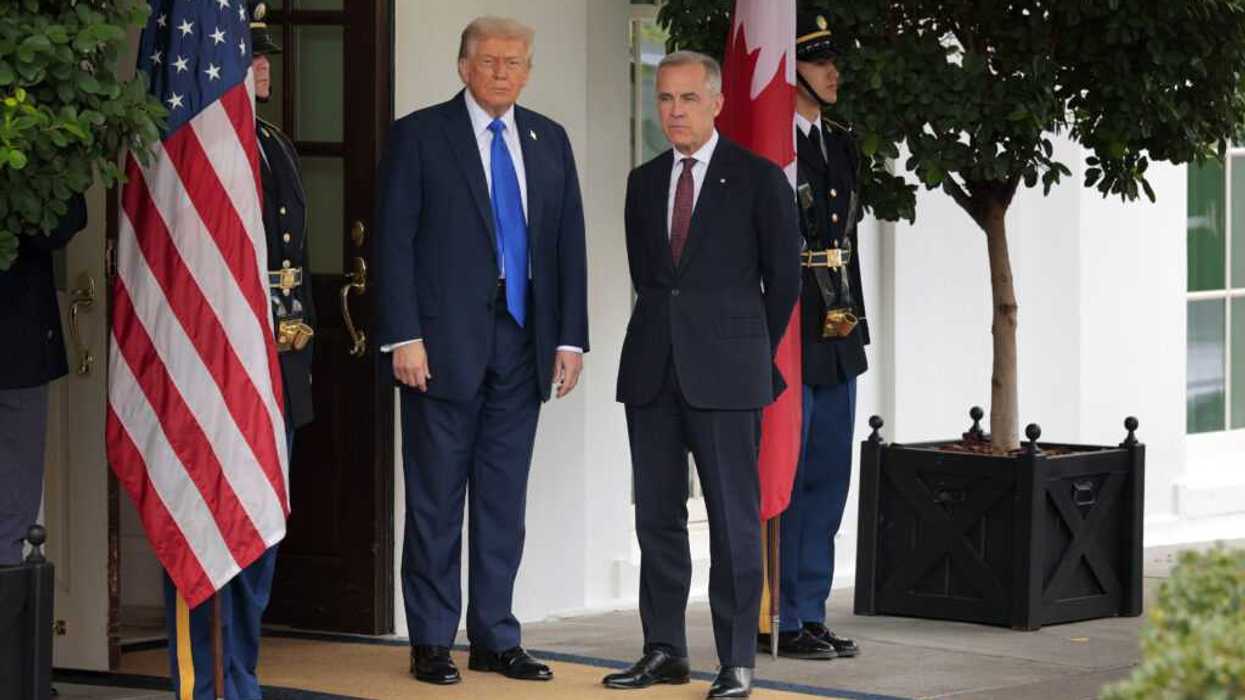
Trump and Carney standing next to American flag

U.S. President Donald Trump welcomes Canadian Prime Minister Mark Carney to the White House on Oct. 7, 2025 in Washington, D.C.

(Chip Somodevilla/Getty Images/TCA)

This summer, America played host to one of the biggest international events on the planet, the World Cup, drawing millions of foreigners to our cities and towns, our stadiums and our national parks, where many of them had never been before.

The consensus was, America is awesome — visitors from Bolivia, Scotland, Uzbekistan, and everywhere in between marveled at the sheer size of our great nation, the diversity of our topography, the deliciousness of our foodstuffs, and, perhaps most importantly, the kindness of our people. (Not to mention, our eighth wonder of the world — Buc-ee’s.)


What a difference a month makes.

Despite our friends in far-flung places singing our praises, now, to hear our closest neighbors tell it, America is nothing but a “ bully” and a “ thug.”

After trade negotiations with Canada collapsed this week, and President Trump announced a whopping 50% tariffs on $20 billion worth of Canadian goods — including Canadian whiskey and hockey sticks — it’s no surprise our friends to the north are less than pleased with their downstairs neighbors.

In our defense, not all of us are responsible for electing the bully and thug in question — and if polls are any indication, most Americans agree with Canada that Trump is doing a terrible job. But still, it’s hard to hear.

Especially since we love Canadians, and we very much want them to love us back.

But after spending years threatening to invade Canada and make it the “51st state,” and mocking its leaders with petty nicknames and school yard insults, Trump may have finally put Canadians’ famous politeness to the test.

“You’re at war when you’re attacked, and we got attacked,” said Prime Minister Mark Carney. “We’re going to hit back.”

Manitoba Premier Wab Kinew called Trump “erratic,” “irresponsible,” and “a bad person” who was “not to be trusted.”

And Ontario Premier Doug Ford wasn’t nearly as nice, calling Trump the “king of bankruptcies,” and telling him to “Kiss my ass.”

Again, these are our friends talking!

But their righteous indignation is justified — we are in the midst of an unpopular war that we can’t seem to end, our economy is in the toilet, we’re banning books, deporting children with cancer, shooting unarmed protesters, spreading measles, and covering up for one of our most notorious sex offenders. And we have the audacity to attack our nice and normal friends?

But it’s not just an issue of bad manners. Americans have long been accused of that.

It may be an election issue now.

States like Michigan, Maine, Alaska and Ohio, all of which border Canada and are important trade partners, also have another thing in common: highly competitive Senate races.

And despite all but Maine voting for Trump in the last election, Cook Political Report lists all four as a toss-up.

The Canada trade issue is real these voters; for auto workers in Michigan who rely on Canadian aluminum and steel; for 95% of Mainers who rely on Canada for home heating; for Ohioans who use Canadian metals and machinery; for Alaskans who need Canadian crude.

So Democratic Senate candidates like Abdul El-Sayed in Michigan and Mary Peltola in Alaska have yet another important talking point to add to their reservoirs — that Trump’s dumb trade war, much like his dumb actual war, is going to make voters’ lives worse.

Add it to the pile — a majority of voters already believe they are worse off under Trump, and this won’t help.

With fewer than 70 days until the midterm elections, the imprudence of picking a fight with important allies — who now seem prepared to unleash retaliatory economic pain on Americans in competitive states hardly seems debatable.

But Trump seems hell bent on totally destroying whatever good will we still had left on the world stage.

Talk about an own goal.

S.E. Cupp is the host of "S.E. Cupp Unfiltered" on CNN.


Read More

A crowd of people at a military base with President Trump speaking in front of them.

U.S. President Donald Trump speaks during a visit to the Fort Bragg U.S. Army base on February 13, 2026 in Fort Bragg, North Carolina.

Nathan Howard/Getty Images

Reagan’s Strength vs. Trump’s Retreat: U.S. Alliances at Risk

How a country treats its allies and its adversaries says everything about what it believes strength means — a question that was already on my mind the night I sat in a movie theater watching "The Brink of War" when news broke.

The film reconstructs the 1986 Reykjavik summit, where President Ronald Reagan and General Secretary of the Communist Party of the Soviet Union Mikhail Gorbachev spent a tense weekend negotiating over the fate of the world's nuclear arsenals.

Keep Reading Show less
A military ship out in the sea.

USS Abraham Lincoln (CVN 72) conducts U.S. blockade operations related to the Strait of Hormuz on April 16, 2026 in the Arabian Sea.

Handout Photo by the U.S. Navy via Getty Images

Reasons to Care about the Sailors Aboard the USS Lincoln

The crew of the USS Abraham Lincoln has been at sea for over 265 days, and over 200 days without a port call. The aircraft carrier left San Diego on November 21, 202 for a routine Pacific deployment, only to be redirected to the Middle East instead for a war Congress never declared and voted not to authorize. Carriers are supposed to pull in every 30 to 45 days for resupply, maintenance, and something resembling a break; the Lincoln has gone nearly five times that long without one–a modern record for a warship.

Consider what that actually means for a human being. You’re living at work, on a ship, with your coworkers, away from your family and friends, and now the ship is starting to fall apart: the water fountains are broken, the water is contaminated, sometimes water needs to be rationed so showers and laundry are secured, the showers are moldy, the toilets are clogged, and the food is rationed, rotten, and can be, as Congressman Mike Levin described, as meager as a half a cup of rice and two tortillas. These are horrible working conditions. Whether or not you believe sailors signed up for this when they joined the military, you must admit, it’s a brutal job.

Keep Reading Show less
Protestors holding signs at a rally, one reads, "Trump is not above the law."

Protesters gather at a Nobody Is Above the Law rally protesting President Trump's interference in the Mueller investigation on November 08, 2018 in Washington, DC.

Larry French/Getty Images

The Double Standard Presidency: When We Watch Leaders Act Above the Law

Americans are told that no one is above the law. Yet every day, they watch a president behave in ways that would get any ordinary citizen fired, disciplined, confronted, or held accountable — and they watch some Americans excuse it. What makes this moment even more striking is that critics across the political spectrum, including conservatives, now warn that the presidency is operating on a dangerous double standard. This is not a partisan concern. It is a constitutional one. And it is tearing at the fabric of our democracy.

For generations, the Constitution has provided guardrails — separation of powers, checks and balances, oversight mechanisms, and limits on executive authority — designed to prevent any leader from functioning above the law. The framers feared concentrated power more than anything else. They believed that the presidency must be constrained not only by written law but by norms of restraint, dignity, and respect for institutions. Those norms held for centuries because presidents understood that the office was larger than any individual, and Congress understood that oversight was not optional.

Keep Reading Show less