


Skip to content
Search

Latest Stories

Follow Us:
Top Stories

Alaska case may open door to reversing Citizens United

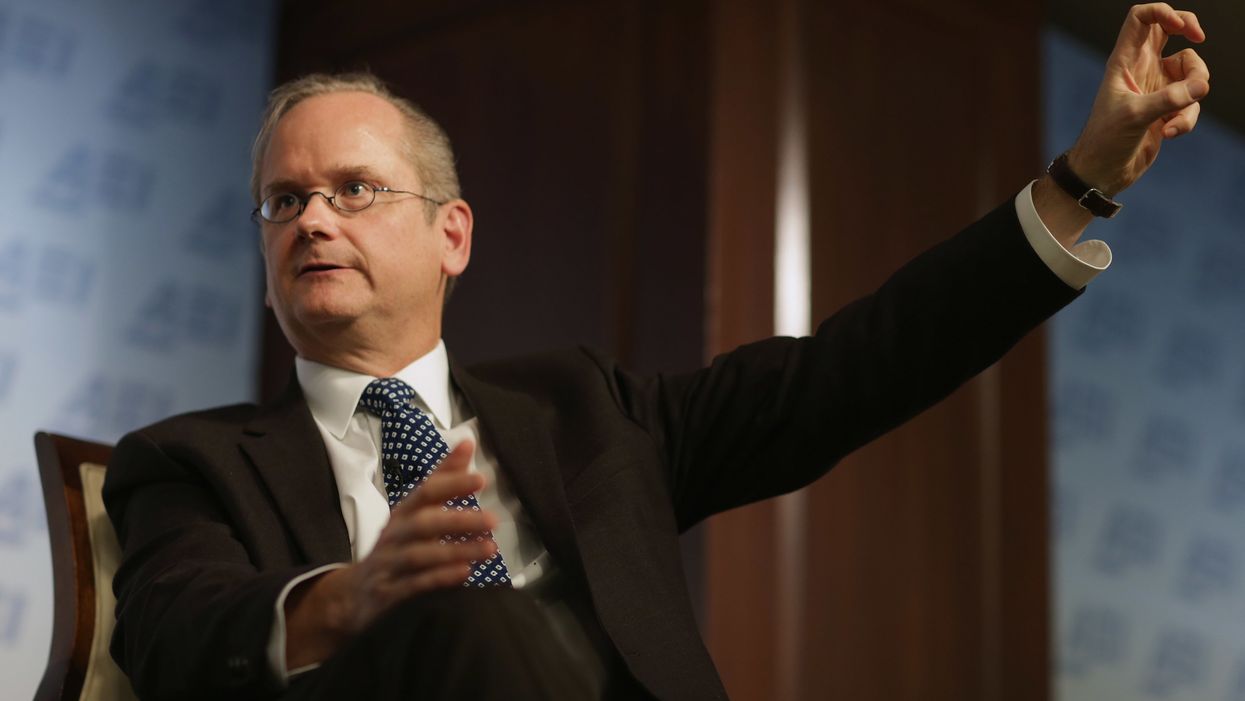
Law professor Lawrence Lessig

"This decision gives Alaskans and all Americans a chance to revisit those destructive decisions," law professor Lawrence Lessig says of the ruling in Alaska.

Chip Somodevilla/Getty Images

Advocates of toughening campaign finance regulation are thrilled by a judge's ruling in Alaska this week, which they view as a potential starting point for reversing the Supreme Court decision that opened the floodgate of money into politics this decade.

The agency that upholds the state's election laws, the Alaska Public Office Commission, must reinstate enforcement of a $500 annual cap on personal contributions to political action committees and other independent groups seeking to influence elections, Judge William Morse of Superior Court in Anchorage ruled Monday.

The judge also asked the Alaska Supreme Court to use his decision to review the constitutionality of the state's entire campaign finance law in hopes of a tougher-is-better decision because, he said, he found the "credible and convincing" evidence "about the vulnerability of Alaska's political environment to corruption to be very powerful and concerning."

Such a ruling from the state's top court could eventually lead to many of the same issues addressed nine years ago in the landmark Citizens United v. FEConce again going before the Supreme Court.


"This decision gives Alaskans and all Americans a chance to revisit those destructive decisions," said Lawrence Lessig, the prominent law professor who founded the campaign finance reform group Equal Citizens and helped develop the lawsuit. "It will allow us to continue to make our case that the Framers did not wish to see super PACs. Just the opposite: they would have despised the kind of corruption we have seen recently, and the Constitution gives states the power to eliminate it."

State regulators stopped enforcing the individual donation limit in 2012, two years after Citizens United, arguing that parts of that 5-4 ruling, and a handful of subsequent lower court decisions in response, had cast doubt on its constitutionality. Seven years later, the judge said, the precedents are clearly supportive of such a limit and the agency has no discretion to avoid enforcing it.

Alaska's campaign finance law also set limits on independent expenditures in state campaigns, but those have not been enforced since the headline ruling of Citizens United: Corporations, nonprofits and unions have a First Amendment right to spend as much as they want on federal campaigns.

The campaign finance case comes at a time when Alaska politics is in one of its frequent upheavals, with a group seeking to recall Republican Gov. Mike Dunleavy now suing after state officials said the grounds were insufficient for kicking the governor out in the middle of his term. Critics say he's incompetent and has recklessly tried to slash spending. Supporters say he's the victim of an effort to undo the 2018 election, which Dunleavey won in an upset after the incumbent dropped his bid for re-election a week before Election Day.

"Many Alaskans saw in the last election cycle, with respect to groups that were supporting Gov. Dunleavy from out of state and things like that, that these independent groups can be very similar and very closely aligned with the campaigns," Jason Harrow, another attorney for the plaintiffs in the contribution suit, told Alaska Public Media. "Because they're technically independent, there's no limits that apply. And that's what we were targeting."


Read More

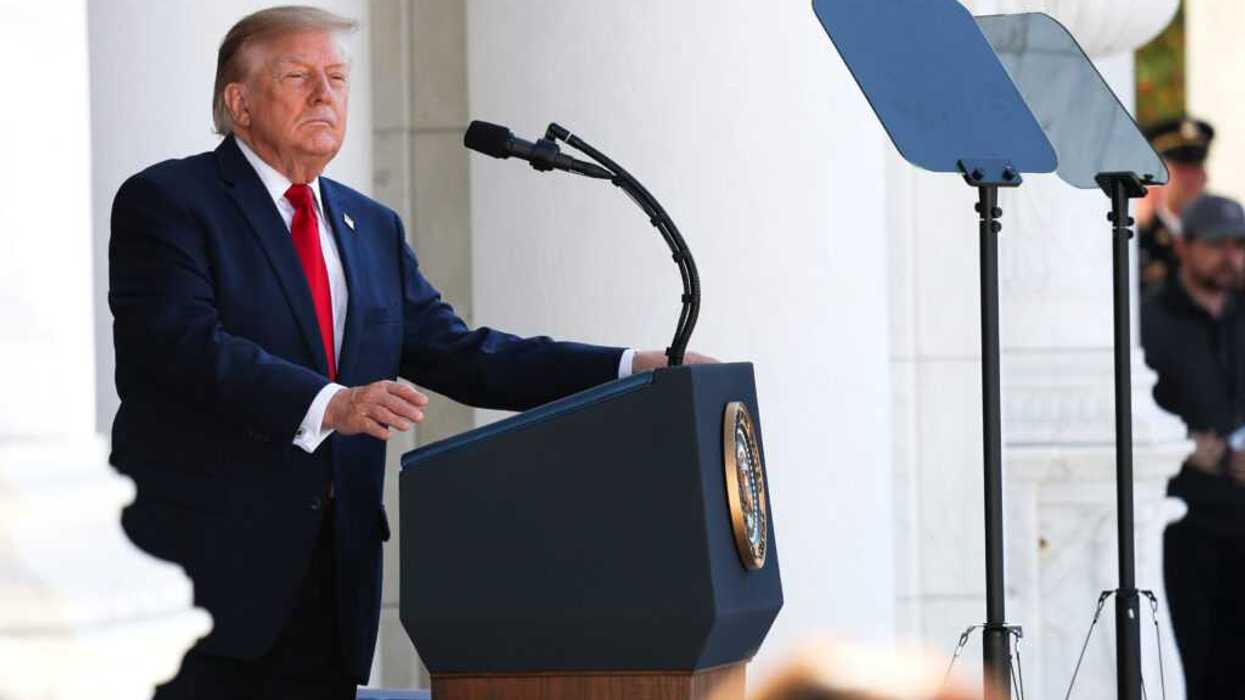
President Donald Trump

President Donald Trump delivers remarks during a ceremony in honor of Veterans Day at Arlington National Cemetery on Nov. 11, 2026 in Arlington, Virginia.

(Kevin Dietsch/Getty Images/TCA)

Voters said ‘enough,’ MAGA didn’t hear

After suffering an absolute drubbing in the midterm elections, Republicans seem to have learned few lessons.

America was not subtle or ambiguous in its rebuke of President Trump, MAGA, and Republicans — no fewer than 30 incumbent House Republicans lost their seats, Senate Republicans lost eight seats, and five states changed party control at the gubernatorial level, all to Dems. It was a bloodbath.

Keep ReadingShow less
Written on a whiteboard: AI?
The letters AI and a question mark written in black marker on a whiteboard

A Democracy That Uses AI Agents Needs Permission Receipts

An organization can correct a faulty AI-generated paragraph in minutes. Repairing the damage after an automated system impersonates a trusted source, emails thousands of people, or changes public records can take much longer. As AI tools gain permission to act, civic institutions need to govern the authority they delegate with the same seriousness they give to the accuracy of an answer.

On October 8, OpenAI reported disrupting covert influence operations linked to Iran and Russia. One operation used seven fabricated journalist identities to place material in outside publications. OpenAI investigators identified almost 100 articles published or syndicated under those bylines across roughly a dozen outlets. The operators were humans using AI to refine articles and pitches. That distinction matters: this was deceptive human direction amplified by technology, rather than evidence of independent machine intentions.

Keep ReadingShow less
United States one hundred dollar bill
A close-up of Benjamin Franklin on a United States one hundred dollar bill
Photo by Adam Nir on Unsplash

Get Ahead of The Next Southern Century

When JPMorgan Chase opened a 6,500-person campus outside Dallas, it wasn't chasing cheap rent. It saw the beginning of opportunity. The bank now employs more people in Texas, about 32,000, than in New York State, where its headquarters still sits. The Park Avenue tower isn't moving but the company's center of gravity already has.

That's the part of the Southern boom narrative most business leaders still misread. The question was never whether it's happening. The question is how long the window will remain open. The South's advantages are concrete, finite, and being consumed in real time. The AI build-out pouring hundreds of billions into Texas and Georgia is straining grids never designed for it. Water, not taxes, is becoming the binding constraint of the decade. The reapportionment that will hand the region outsized political clout doesn't arrive until 2030—but the land, power contracts, and talent pipelines that decide the winners are being locked in this year. Companies treating the South as a bet they can make at leisure are already arriving late.

Keep ReadingShow less
Pacific heights , San Francisco, CA

High view over Pacific heights and San Francisco Bay at sunset

Getty Images

Class A for Residents, Class B for Investors

Neighborhood residents should be able to build ownership without surrendering control to whoever brings the largest check. I propose a neighborhood corporation with Class A shares for residents and Class B shares for outside investors. Pacific Heights and Cow Hollow could examine the first model, then make its documents and lessons available to other neighborhoods.

The distinction must mean something. Class A would protect resident governance. Class B would let outside capital participate on disclosed economic terms. The corporation would own assets it voluntarily acquires and operate agreed services. It would govern those assets and contracts; government authority over zoning, taxes and public streets would remain subject to public law.

Keep ReadingShow less