


Editor’s note: More than 10,000 officials across the country run U.S. elections. This interview is part of a series highlighting the election heroes who are the faces of democracy.
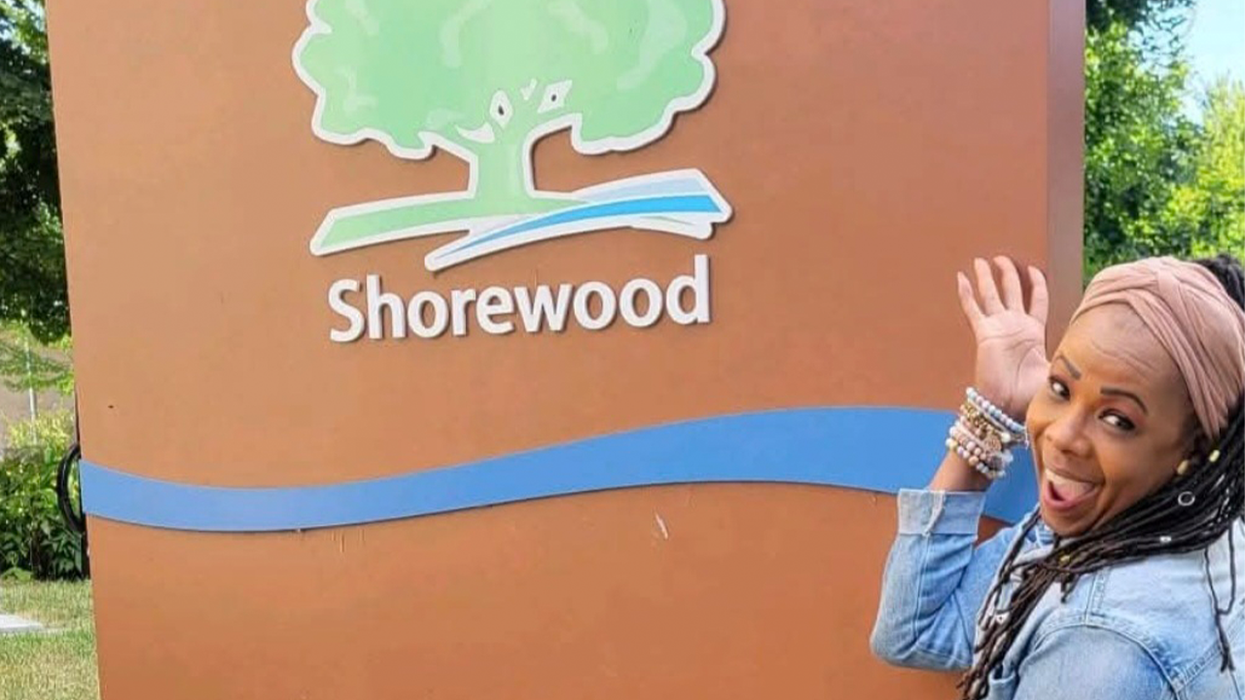
Toya Harrell has served as the nonpartisan Village Clerk of Shorewood, Wisconsin, since 2021. Located in Milwaukee County, the most populous county in the state, Shorewood lies just north of the city of Milwaukee and is the most densely populated village in the state with over 13,000 residents, including over 9,000 registered voters.
Before becoming Shorewood’s clerk, Harrell previously worked as a municipal court clerk for five years. In August 2025, Harrell was appointed as the president of the Wisconsin Municipal Clerks Association (WMCA), which provides municipal clerks with training, resources, and best practices for election administration. She previously served as the first vice president for WMCA and as the chair of WMCA’s Promotions Committee. Harrell is also involved with the International Institute of Municipal Clerks (IIMC), an organization that promotes the development of municipal clerks worldwide. She is the co-chair of the Inclusivity, Diversity, Equity, Accessibility, and Learning Committee and a member of the IIMC’s Conference Planning Committee.
Additionally, Harrell serves on the Clerks Advisory Board for the University of Wisconsin-Green Bay’s Clerk and Treasurer Institute (UWBG CTI), an online program that provides learning and training opportunities for current and future clerks. She is also a member of the Elections Observer Advisory Board for the Wisconsin Elections Committee.
Since 2024, Harrell has been part of Issue One’s Faces of Democracy campaign advocating for protections for election workers and for regular, predictable, and sufficient federal funding of elections.
This interview has been edited for length and clarity.
Issue One: How did you end up in this profession?
Toya Harrell: Before becoming a municipal clerk, I was a court clerk for almost six years. My husband and I were relocating back to the Milwaukee area, and I had applied for court clerk positions, but they ended up actually being municipal clerk positions. That's the honest reason of how I got to this role.
Issue One: What part of the election administration story in Wisconsin do you think is not told or widely understood enough?
Toya Harrell: The part that I feel isn't told is what we actually do as clerks. We do a lot in preparing for the elections, for example, with voter registration. Because the public doesn’t understand what we do, they sometimes throw theories around about what we do and how we do it.
We work really hard with our county and state to conduct the election. It would be nice if people came and wanted to spend a day with the clerk and understand what we do. Our main goal is to make sure that we have transparency and integrity in the election process.
Issue One: The state of Wisconsin has nearly 2,000 local election administrators. What are some of the unique considerations of operating in such a hyperlocalized manner?
Toya Harrell: In Wisconsin, we have 1,850 municipalities and 72 counties. We all play a pivotal role, both the county clerks and the municipal clerks, in making sure that elections are run smoothly.
Some of the tasks we oversee include things like ensuring accuracy of what is on the ballot, maintaining voter registrations, preparing and distributing ballots, and overseeing the absentee voting process. We also do public tests of voting equipment where we invite the public to see the process. We do a lot to promote security, including that in our building; we have literal vaults to house our ballots until Election Day.
We are one of the few states that run elections at the municipal level. One of the advantages of this is that we have rapport with the residents, because oftentimes municipalities are serving a smaller number of voters compared to states that run elections at the county level. Since Shorewood is a smaller municipality, if our residents have questions, we can help them get to a resolution. As municipal clerks, our residents see us on the day to day because we do more than just run elections. We have a strong rapport with our residents and are able to establish a strong basis of trust.
Issue One: How many voters are on the roll in the Village of Shorewood?
Toya Harrell: Shorewood has 13,743 residents and 9,820 are registered voters. That speaks to Shorewood’s strong commitment to the electoral process.
We are very fortunate in that even our youth are very involved in helping to get other youth registered to vote. I’m very fortunate. I remember asking a resident when I first started, “Is it always this busy during election time?” and she said, “Honey, Shorewood votes.” And it’s true. Shorewood has a very strong voter turnout rate; I think recently, it was over 90%.
I’m very proud to serve in a community that takes voting so seriously.
Issue One: You were recently sworn in as the president of the Wisconsin Municipal Clerks Association. Can you speak more about the benefits of participating in a state association?
Toya Harrell: Being a part of the Wisconsin Municipal Clerk’s Association has a lot of benefits. This association offers a wealth of resources, such as training and best practices for professional development. We help clerks stay up to date with ever-changing election laws.
The resources also include training on different municipal operations outside of elections, such as record management, resolutions, ordinances, and licensing processes.
We also foster strong networking and mentorship opportunities, especially for new clerks. This allows clerks from across the state to share their experiences. We also have a clerk listserv so that clerks can email questions to the body and get collaborative advice on how to approach something. It’s really great that we are able to show strong support for one another.
Issue One: What is the price tag of running an election in your jurisdiction, and where does funding for election administration in your jurisdiction come from?
Toya Harrell: I’m careful to not put an exact number on this, because it really does vary based on the type of election we have. It varies on the number of voters and their method of voting. From there, you have to determine your operational costs with the different supplies and materials, and staffing costs for election inspectors, depending on what the needs are.
Funding for our election and for all elections in the state of Wisconsin comes from a municipal budget. Sometimes, we have to be a little more creative with how we spend our budget, depending on the number of elections that we have. For example, last year, we had six elections, including two special elections. That came with a budget constraint. As clerks, we have to be ready because anything can happen, and we have to be in forward thinking mode. We had to be creative in deciding where polling locations should be established — we expected low turnout for one of the elections, and that it didn’t make sense to have three locations, so we condensed it into one polling location.
Issue One: The 2026 midterm elections are about one year away; what would be your elevator pitch to someone considering becoming a poll worker?
Toya Harrell: In Shorewood, I don’t call my election inspectors, election inspectors. I call them the superheroes of Shorewood because they really are in what they do.
I don’t have difficulty finding election inspectors. I usually have more than I need. My elevator pitch is simple: “Come join the superheroes of Shorewood.” I try to incorporate that tagline into fliers, training, and presentations for election inspectors.
Election inspectors are people of different backgrounds and different abilities who come together for one just cause — that’s why I call them my superheroes.
Issue One: In recent years, election-related misconceptions, conspiracy theories, and lies have proliferated. How has this impacted your daily work?
Toya Harrell: Social media has been a main source of users disseminating false things. They’ve gotten very creative, especially with AI-generated content. Negativity, for some reason, seems to spread a lot quicker than the truth.
In my department, I create an atmosphere that is centered around accuracy. We go over accurate content, state statute, and frequently asked questions that are given to us by the Wisconsin Elections Commission to help us. The Milwaukee County Elections director is also good at giving us information and direction on how we should respond. I always want to make sure that no matter what is out there and what is being said, that we come back with the concrete truth and cite state statutes. When you can give people concrete evidence, they are less likely to come at you with more conspiracy theories.
I also tell my staff to try not to take it personally. When people are angry, they are not angry at my staff — they are angry at the information they received or something they saw. We just have to make sure we are staying vigilant in providing the truth.
Issue One: Aside from that, what are your biggest concerns as you look ahead to the 2026 elections?
Toya Harrell: My biggest concern is for my fellow clerks in Wisconsin due to the bullying tactics that are out there and the threats that they receive. I’m really concerned about them.
As the president of the Wisconsin Municipal Clerks Association, I have to think about creative ways of ensuring that they are able to stay motivated and administer elections. I have to make sure that they know they are supported. When clerks are in their municipalities and are targeted by negativity, it is easy to feel alone. It is important to me that the inner beings of clerks are taken care of and that they are taking time to break away and reset themselves because it’s hard.
My main focus is trying to come up with ways of just keeping them motivated and encouraged because that goes a long way in refueling their innerselves. It’s also been important to give them encouragement after election season — to say “we did it, we got through it together.”
That’s my biggest concern, making sure that they stay motivated.
Issue One: Given these challenges, what inspires you to stay in this line of work?
Toya Harrell: My residents. Shorewood is great; it is a walkable community, so we have a lot of residents that come into our office. I have one resident who is a great grandma, and she’s always showing me pictures of her great grandbaby. To hear stories of the adversities that some of the residents have faced, the challenges that they faced as women and as people of color to participate in the voting process, and hearing what they went through just so it could be made easier today — that’s inspiring.
I also love hearing the history of Shorewood. I love hearing residents speak about their parents who designed the architecture of the building our office is in, or that laid out the planning for the street we are located on. It’s so refreshing.
Because of the high voter turnout in Shorewood, there are so many great stories that have to do with the election process and how it was before versus how it is now. It motivates me that I’m in the right place, the right setting, and on the right career path.
Issue One: Outside of being passionate about running safe and secure elections, what are your hobbies, or what is a fun fact that most people might not know about you?
Toya Harrell: I make my own beaded jewelry. I make bracelets, earrings, and necklaces for myself. I have around three shelves of beaded bracelets, because I like to coordinate them with my outfits.
I also make my own bath soaps. I learned how to do that during the pandemic. It’s really great because I make them for myself; it’s what gives me peace. I get filled with joy to see it all come together.
Issue One: What is your favorite book or movie?
Toya Harrell: I will read and watch anything horror-related! In October, I watch a horror movie every single day.
Issue One: Which historical figure would you have most liked to have had an opportunity to meet?
Toya Harrell: I’m related to Rosa Louise McCauley — who the world knows as Rosa Parks. My great grandma and her were first cousins. I would have loved to have talked to her and just learned what was going on in her brain — the determination, the fear, everything that was happening from being the secretary of the NAACP to being a person who played such a pivotal role in the movement towards civil rights.
I feel like I have a lot of her in me in terms of my determination to do what’s right, to be a good troublemaker, and working to promote equity and inclusion. I would have loved to have learned from her firsthand what it meant to be a pioneer, not only as an African-American, but as a woman. I really want to know what it was like to be in that time, in that setting, and what happened after — nobody really talks about the after for her. Nobody talks about the everyday things she did in her life, like how she was a seamstress, or how she felt when she was in jail. The family talks about it, but it would have been nice to hear from her.
Rosa was also a member of the Order of the Eastern Star, which I am a member of. I want to make sure I continue that legacy, not just from the civil rights aspect, but also in my philanthropic duties to my community. Even though it was not my intention to become a municipal clerk, I feel like that this is truly my calling because I come from that legacy. Because of her, others like her, and family members who were fighting the fight, I’m inspired to do what I can and continue that for the next generation.
Amelia Minkin is a research associate at Issue One.
Caroline Pirrone is an election protection and money in politics intern at Issue One.
Ella Charlesworth is the strategic engagement manager at Issue One.







The President Invited Iran to Bomb My Home