




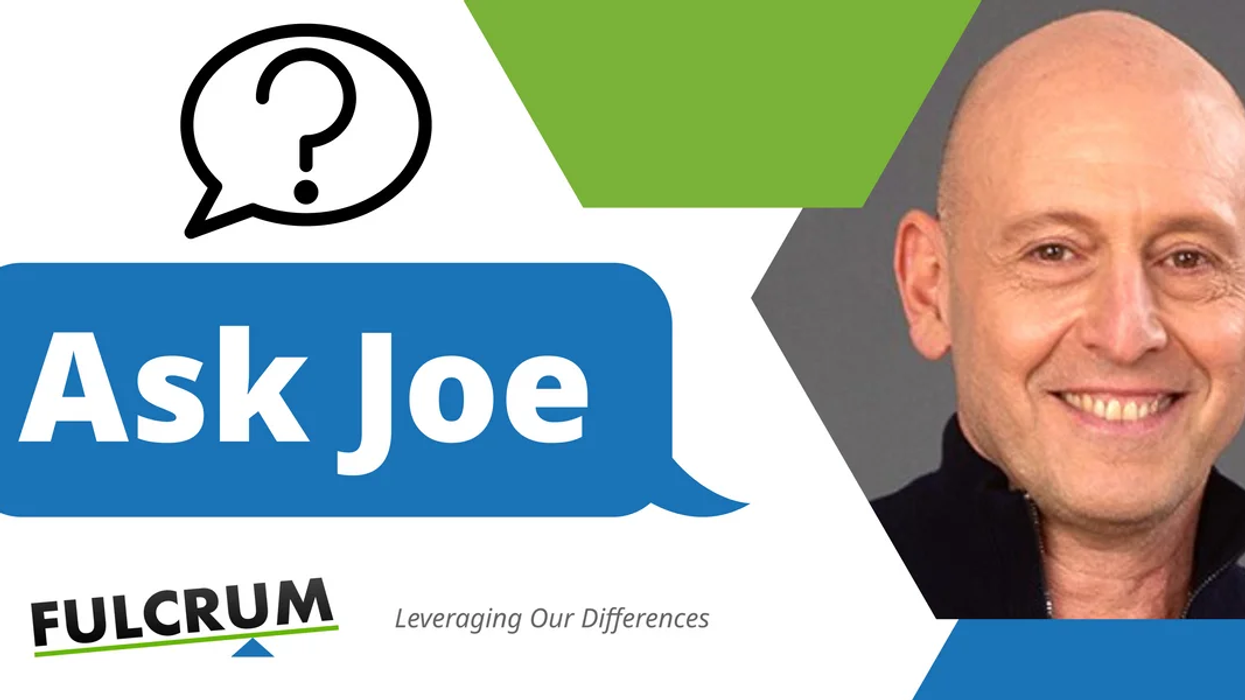

Hi, Joe.
I have been struggling with an issue since I got back from visiting family in the Midwest for the holidays. Everyone seemed to be having a good time, but I was shocked at how bad my nephew looked. He looked too thin, worn out, and seemed emotionally disconnected. He was always a bright, happy kid who went out of his way to connect.
I used to volunteer in a health clinic in the city I live in and saw many people who looked like that with addictions to meth or fentanyl. I got scared. And everyone there, including his mother, seemed to just ignore it. I tried to talk to her (she’s my sister) but she didn’t want to discuss it. I checked with his sister (my niece) and she says he’s started hanging out with a new group of friends.
I really don’t know what to do. Any thoughts?
Concerned
Dear Concerned,
I’m sorry to hear you and your family are going through this. It’s tragic to see the increases in severe depression and drug addiction, especially amongst young people. There are, of course, so many factors that influence this. I am not qualified to speak to this from the medical or psychological aspects of this issue, but I can respond to your concern about what actions you could possibly take to address that situation.
While there can be many reasons for addiction, one tragic factor that perpetuates the pain and suffering is a debilitating pattern I have talked about many times, called “chronic niceness.” I call it tragic, because we see over and over again how we allow ourselves or others to be harmed by not speaking truth or advocating for ourselves and others.
Whether it is drug addiction or something else, it sounds like your nephew is having a rough time, and nobody seems to be willing to have the uncomfortable conversations to reach out to him. Everything seems to be “nice” on the surface. But niceness that is chronic becomes detrimental when we constantly and habitually revert to being nice, even in situations where something more courageous, truthful or assertive is needed.
Sometimes, what is needed is fierce compassion – that courageous moment when the desire to advocate for someone, or pull them from the brink of destructive behavior, outweighs the fear of rocking the boat or being attacked for speaking truth. Here’s a story that happened to me a number of years ago:
When I was living in the Netherlands, we had a circle of friends. We were very close. Suddenly one friend was not very present, and, when he was with us, he was not really himself. He kept asking us for money. It became clear to the rest of us that he was using the money for his drug habit.
Because we all suffered from Chronic Niceness, we kept giving him money. We also noticed that we were losing him, and that we were all carrying a big amount of resentment, pain, fear and anger.
I felt like something needed to be done; I decided to “respectfully confront” him. I did it with empathy and love, but also with firmness and setting of clear boundaries. I told him that I wasn’t going to give him money anymore and I was worried about him.
This caused him to lash out and get aggressive. He refused to see me again and turned a few of our friends against me. This, of course, broke my heart. I doubted myself, and at times wished I didn’t confront him. But I also was able to stand strong in my conviction that my intention was to empower him and us. I didn’t judge him; I simply expressed my fear and concerns for his well-being and my desire to bring us all closer together. Thatreminder to myself was all I had to stay strong in my decision.
Then about five years later at a party, I ran into this friend. This was the first time we saw each other since that time and he looked good. After a lot of small talk, he shared with me that it was my conversation with him that helped him see how lost he was in the drugs, and that eventually he chose to seek out help. He expressed his gratitude.
It seems that you are the one who may need to step into fierce compassion, Concerned. If you decide to do this, I would suggest approaching his mom and sister first; not him. Perhaps the first step is to help shake them out of their Chronic Niceness. Also, remember that, at this point, you have no proof yet that your nephew is suffering from drug abuse, just assumptions. Be curious; ask questions. Perhaps do your research and come with data and research on drug addiction if you think your sister would be open to receiving it.
And go slowly. Many truth tellers have become the target of those who cannot let go of their Chronic Niceness and refuse to see what is happening. This is their work to do. Offer support. Become the nurturer and protector for the whole family. I would recommend you also find ways to support yourself in this process. Or you may decide that you are not up for this task. Be gentle with yourself.
I hope this offers some insights for what your next steps could be. If you are open to it, please send me updates on how this unfolds.
With fierce support,
Joe
Have a question for Joe? Send an email to AskJoe@fulcrum.us. Learn more about Joe Weston and his work here.