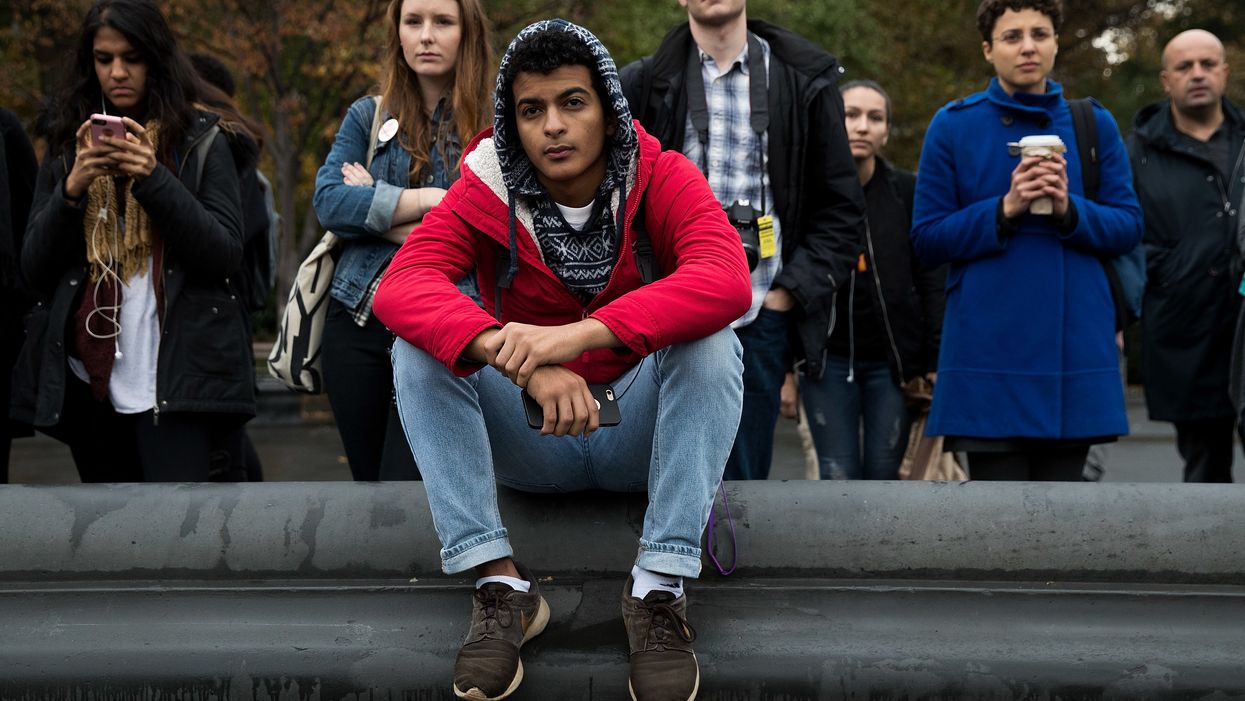

Shafer, a junior at the University of California, Berkeley, is the director of external affairs for BridgeUSA, a national, student-run organization seeking to depolarize college campuses and increase youth civic engagement.
Do you feel like your vote actually matters? I sure don't. Though I proudly registered two years ago on my 18th birthday at city hall in my Chicago suburb, and have voted in every single election since, I know my vote does not truly matter. It is a drop in a bucket in a safe district.
The reality is, most of our votes do not matter; 85 percent of House districts are not in jeopardy for the party that holds the seat. Millions are misrepresented by politicians they oppose. Candidates from third parties, who may be most representative of a district, are dismissed as "spoilers" ruining the election for the two-party duopoly. And safe districts encourage candidates to pull away from the middle to win primaries, but never move back in time for an assured victory in the general election.
We all know the troubles riddling the Electoral College — from granting a voter in Wyoming 57 times the voting power as a voter in California, to giving a single white voter the power of 1.05 voters but an Asian voter the influence of 0.58 of a vote. This system has grown horribly out of step with the wishes of the majority; three out of the five instances of a popularly elected candidate losing an electoral vote occurred in the past 16 years.
As young people flock to coastal urban areas, their votes matter less and less in "safe" states and districts. Despite "one person, one vote," gerrymandered House districts and the Electoral College clearly favor a particular kind of voter: rural, older and white, stacking our democracy against the increasingly young and diverse populace the millennial and Gen Z generations are creating.
Uncompetitive House races and a rigged presidential electoral system have contributed to political polarization, grinding governance to a standstill. Despite mounting crises — climate change, vast wealth inequality, ballooning student loan debt and unprecedented levels of gun violence, to name a few —- our politics has become polarized to the point of being ineffectual. Obstructionism has become a winning political tactic, leaving massive societal ailments to worsen.
Millennials and Gen Zers look at this disfunction and increasingly dismiss politics as impossibly gridlocked and incapable, fueling vast political apathy in the leaders of tomorrow. Older generations love pushing the narrative that "young people don't vote." But with a rigged, uncompetitive democracy and an impossibly polarized government, it's no wonder young people don't think the answer lies in government.
We, the young adults, should not discount government, though. We can and should aim to make democracy work once more. And democracy reforms should be an American issue, not a partisan one. Come 2020, millennials and Gen Zers will comprise the largest bloc of eligible voters, outpacing the long-dominant baby boomer generation. We have the power to engage with democracy and demand systemic change to address the crises our government is failing to act upon.
If we want to solve the issues defining our generations' struggles, we have to make our voices heard. We need to vote. We need to knock on doors for a candidate we support, or at the very least post Instagram stories about political issues we care about. If we want to enact change, we need to take our rightful seat at the long table of democracy and start advocating for ourselves.
At BridgeUSA, the leading multipartisan organization on college campuses, we work for students to actively engage with our democracy through the "bridge mindset." To mitigate polarization, we encourage students to explore ideas and learn to articulate their preferences through civil discourse. In doing so, we create empathetic young leaders excited to join the political process in productive ways.
Sharpening youth political engagement is certainly the first step. But once we begin to fulfill our civic duty as active citizens, we need to demand changes to make our democracy more democratic. A laundry list of effective reforms would be effective, and they can be boiled down to simply: Unrig our elections to make them more democratic.
Ridding the system of institutions that enable tyranny of the minority should be the first step. Since abolishing the Electoral College is a pipe dream, we should urge our state elected officials to embrace the interstate compact under which a state's electors are committed to vote for the candidate who wins the national popular vote. If states with a combined 270 of the 538 electoral votes do this, we can achieve a system where every individual vote does matter.
Our election maps are also hopelessly gerrymandered to favor the incumbent party that drew the lines. Just looking at Maryland, Illinois, North Carolina and Pennsylvania reveals the transpartisan appeal to ending this: Both parties use it to disadvantage the other, so both parties should have a stake in ending it to make our elections more competitive and ensure our representatives are truly representative of their states. Seventeen states have adopted independent commissions, or other innovative measures that remove power from legislators' hands, to draw their lines following the 2020 census. Hopefully more will follow.
American democracy, despite how broken and dysfunctional it is currently, can be saved. But it requires young people to engage the system and press for change. If not us, the older politicians who continue to benefit from the system will never concede power by altering it. We have the power to unrig the system. Political apathy is not the answer. As a generation, we must turn to peaceful activism and civic engagement to demand a government that listens to us and a democracy that works for every American.